Understanding the Core Differences
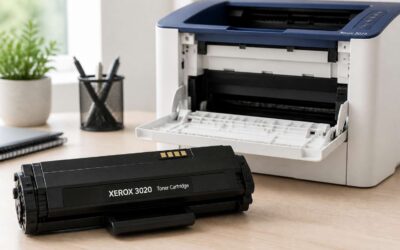
Defining Toner Cartridges and How They Work
Toner cartridges are the quiet workhorses of laser printers, storing a fine plastic powder that transforms into text. Unlike the liquid ink in standard printer cartridges, toner relies on electrostatic charge. Here is the ritual of its operation:
- A laser imprints the drum with the page’s image.
- Toner particles cling to that charged pattern.
- Heat and pressure fuse the powder into the paper’s surface.
This distinction matters in any toner cartridge vs printer cartridge encounter. Toner endures heavy workloads, often exceeding 10,000 pages, while printer cartridges, especially inkjet versions, dry out or clog. In my experience, South African offices prefer toner for its stamina. The cartridge itself is sealed, so toner remains potent until the final page.
Key Physical Differences: Powder vs. Liquid
The physical difference between toner and ink is stark. Toner cartridge vs printer cartridge comparisons often hinge on texture alone.
Toner arrives as a dry powder, fine as dust, packed in a sealed unit. Printer cartridges hold liquid ink, watery or gel-like, prone to evaporation.
- Toner resists smudging once fused to paper.
- Liquid ink stays wet for seconds, vulnerable to fingerprints.
- Toner requires heat to bond; ink simply soaks into fibres.
That last point changes maintenance. A spilled toner cartridge creates a dust cloud that clings to surfaces. A leaking printer cartridge leaves a purple stain that spreads. In South Africa, heat accelerates evaporation, harming liquid cartridges faster. Toner sits inert until the drum calls. The choice rests on this physical difference.
The Role of Heat and Fusing in Toner Printing
Heat is the defining factor in a toner cartridge vs printer cartridge debate. Liquid ink from a printer cartridge simply rests atop or soaks into the paper fibres. Toner, however, demands a transformation. The printer uses a fuser unit, essentially a set of heated rollers, to apply pressure and temperatures around 180 degrees Celsius.
This process melts the plastic resin within the toner powder. The image is stamped onto the page in a raw, dusty state, then this heat welds it permanently into the material. It happens in under a second. In South Africa’s demanding climate, this fusion performs consistently. The toner cartridge vs printer cartridge comparison becomes clear when you consider that heat creates a bond that resists moisture and fading, whereas ink remains surface-level and vulnerable to the elements. The result is a document that is part of the paper, not a guest upon it.
Performance and Output Quality Compared
Print Speed and Page Volume Capabilities
Toner cartridges typically outperform their liquid counterparts in raw speed and endurance. When measuring pages per minute, laser devices often hit 25 to 40, while most inkjet units lag at 10 to 20. Page volume reveals a starker divide. Toner units handle 2,500 to 10,000 prints before replacement; inkjet cartridges struggle past 500. This difference matters for offices with monthly print quotas!
- A standard HP toner cartridge yields 2,000 pages at 5% coverage.
- A typical Epson printer cartridge yields 200 pages at the same coverage.
Output quality also diverges. Toner produces crisp text edges and uniform blacks; inkjet excels at photo gradients. The toner cartridge vs printer cartridge debate hinges on workload rather than cost per page.
Color Accuracy and Resolution Differences
Color accuracy is where the toner cartridge vs printer cartridge argument reveals its true nuance. Inkjet systems spray microscopic dye or pigment droplets in overlapping layers, creating smooth tonal transitions that mimic photographic prints. A dedicated photo inkjet can output at 4800 DPI, while a typical laser engine hovers around 600 to 1200 DPI. Yet resolution alone does not decide quality. Toner fuses to the page as solid particles, leaving crisp, isolated dots. Inkjet droplets can bleed into surrounding fibres, softening fine details.
For photorealistic art, richer skin tones and sky gradients, inkjet remains the natural choice. For sharp text, fine lines and flat corporate colours, toner pulls ahead. Consider these practical differences:
- Inkjet reproduces a wider colour gamut with subtle midtone variations.
- Toner stays uniform across different paper types; inkjet varies with coating.
- High DPI numbers on inkjet often slow down printing; toner keeps pace.
So when you weigh the toner cartridge vs printer cartridge, think about the visual elements that dominate your work, not just the spec sheet.
Longevity of Prints: Fading, Smudging, and Water Resistance
Sunlight and humidity in South Africa can age a print within a single season. The toner cartridge vs printer cartridge decision matters most when you plan to keep documents for years. Laser toner fuses into paper fibres under heat, forming a surface that resists water spills and casual smudging. Inkjet relies on liquid dyes or pigments that sit closer to the paper. Even pigment-based inkjet prints remain vulnerable to abrasion and prolonged UV exposure.
Archival tests show that dark, dry storage preserves inkjet prints for decades, but a framed print on a sunny wall can show fading within months. Toner prints hold contrast and colour density under the same conditions. A quick breakdown helps:
- Toner prints survive coffee drips, highlighter marks, and repeated handling.
- Inkjet prints need lamination or a protective spray to match that resilience.
For certificates, contracts, and family photos that must outlast a hard drive, the fused powder bond of toner is the quieter, more reliable choice.
Paper Compatibility and Handling
Paper is the quiet partner in the toner cartridge vs printer cartridge equation. Toner performs with dense, consistent text that holds sharp edges on standard office stock. Inkjet, in contrast, delights the eye with smooth photographic tones, yet it can wander on cheap paper. I have seen fresh inkjet pages smear under a thumb, while toner prints stay unbothered.
Paper compatibility exposes a deeper split. In the toner cartridge vs printer cartridge decision, heat changes everything. Laser fusing wrinkles lightweight sheets and can melt certain coated stocks. Inkjet accepts a broader range of weights, but liquid saturation curls thin media.
- Toner suits uncoated bond, cardstock, and recycled paper.
- Inkjet thrives on glossy photo paper and textured fine art sheets.
- Labels and transparencies demand specially formulated versions for either system.
The paper you feed shapes the performance you get.
Ideal Use Cases for Toner-Based Printers
Output quality in the toner cartridge vs printer cartridge comparison exposes a distinct split. Toner renders text with an unvarying presence on the page. Inkjet output has its strengths, but toner delivers uniform density across an entire print run. I have watched toner pages hold crisp small fonts while inkjet prints soften at the same size.
Ideal use cases for toner-based printers centre on consistency:
- High-volume office correspondence requiring uniform density
- Text-heavy documents where small font legibility is non-negotiable
- Multi-part forms and contracts that demand identical copies
Toner rewards deliberate printing. Each page emerges identical to the last. Offices across South Africa depend on that predictability during peak print runs!
Ideal Use Cases for Inkjet-Based Printers
Inkjet technology rewards spontaneity. The liquid dye or pigment lands softly on the page, creating smooth transitions that suit photographic reproductions and layered imagery. For South African small businesses producing graduation invitations, event signage, or personalised gifts, the inkjet printer cartridge offers a lower entry cost and freedom to experiment without committing to a full production run.
I have watched inkjet outperform toner here:
- Short-run marketing materials that change frequently
- Photo prints destined for albums or gallery walls
- Mixed media projects on textured art paper or canvas
When weighing toner cartridge vs printer cartridge, inkjet handles smaller quantities with less waste. A business printing forty colour flyers each month will find the liquid approach more forgiving. The printer cartridge excels at capturing nuance, from subtle skin tones to pale gradients of a Cape Town sunset. That range makes inkjet the preferred tool for creative professionals who value depth over volume!
Cost Analysis and Economic Considerations
Upfront Printer Costs: Laser vs. Inkjet
In South Africa, the price gap between a modest inkjet and a compact laser printer often misleads buyers. A R1,200 inkjet looks like a bargain next to a R3,500 laser, yet that arithmetic ignores the consumables inside each box. Both machines ship with starter cartridges, and here the toner cartridge vs printer cartridge comparison sharpens into a question of yield, not just chemistry.
Starter ink cartridges may deliver 200 pages. Starter toner cartridges often deliver 700 or more. The true cost per page emerges only after replacing those first cartridges, and that is where the economics diverge dramatically.
- Laser printers demand higher initial outlay but sustain heavy workloads over years.
- Inkjet printers offer low entry prices, though frequent cartridge swaps diminish savings.
For a home office printing 50 pages weekly, the laser’s upfront premium may pay for itself within months. The toner cartridge vs printer cartridge relationship thus reverses expectations, making the cheaper machine the more expensive choice over time.
Cost Per Page: Toner Yield vs. Ink Yield
Accounting firms across Johannesburg track toner cartridge vs printer cartridge expenses with grim precision. The inkjet’s consumables create a cadence of replacement, a rhythm measured in weeks rather than months. Each swap whispers the true cost per page. The laser’s toner cartridge persists. It survives entire quarters of invoices, statements, and client correspondence. The arithmetic favors patience.
Consider the stark numbers from local suppliers. A standard ink cartridge yields roughly 300 pages before fading. A toner cartridge delivers 1,500 pages of dense text. The cost per page for ink hovers around R1.20. Toner drops to R0.45 per page. For a business printing 300 pages monthly, the inkjet demands R360 monthly. The laser requires R135. That difference compounds into annual savings exceeding R2,700.
– Ink cartridges: replacement every 1 to 2 months for active offices
– Toner cartridges: replacement every 5 to 6 months under identical workloads
– Page yield disparity: often 4 to 5 times greater for toner
The hidden expense of frequent inkjet maintenance, including print head cleaning and alignment cycles, adds another layer to the toner cartridge vs printer cartridge debate. These automated rituals consume ink without producing a single document. Toner printers bypass this ritual entirely. Their imaging drums and fuser assemblies operate with quiet consistency.
The cost analysis therefore becomes a study in recurring expenditure. The initial purchase price fades into irrelevance. The monthly consumable bill dictates profitability. For anyone tracking expenses, the toner cartridge vs printer cartridge choice determines the weight of each month’s stationery budget.
Understanding Page Yield Ratings and ISO Standards
Here is the secret about page yield ratings. They come from standardized tests, not your actual workload. The ISO/IEC 19752 standard governs toner cartridge testing, while ISO/IEC 24712 applies to inkjet cartridges. Both use a test page with roughly 5% coverage. That is a light page.
Your real documents, especially those dense quarterly tax tables, exceed that coverage. The toner cartridge vs printer cartridge comparison shifts once you account for this. The printed page count on the box rarely matches the page count in your tray.
- ISO/IEC 19752: monochrome toner yield
- ISO/IEC 24712: color inkjet yield
That rating provides a baseline. The yield difference between toner and ink remains consistent, but your specific font, margins, and graphics change the math. For accurate cost analysis, treat the international rating as a starting point, not a prophecy. Trust it for comparison, not for invoice forecasting!
Hidden Costs: Cleaning, Calibration, and Replacement Parts
The true cost of a printer never appears on the shelf price. That figure is simply the gateway. The ongoing financial relationship involves consumables, service, and the inevitable wear on internal mechanisms. When comparing toner cartridge vs printer cartridge, owners often miss the ancillary expenses that arrive quietly, long after the initial purchase.
Laser printers demand periodic cleaning of the fuser unit and the corona wire. These components accumulate toner dust, which degrades output quality and can cause premature failure. Inkjet systems require regular nozzle checks and head cleaning cycles, and these cycles consume precious ink. A printer left idle for weeks often burns an entire cartridge just to clear clogged jets on startup. Consider the following components that require periodic replacement:
– Fuser kits and transfer rollers
– Maintenance cartridges for waste ink
– Pickup rollers and separation pads
The yield estimates on a box assume standard operating conditions. Realistic office environments, with dust, humidity shifts, and frequent power cycles, place stress on the machine’s carriages and gears. Each laser printer has a stated duty cycle, and exceeding that cycle accelerates wear on the drum and developer unit. Inkjet printheads, especially the integrated types found in many consumer models, fail after a finite number of prints. Replacing a printhead often equals the cost of the printer itself. The comparison of toner cartridge vs printer cartridge therefore extends beyond the liquid or powder inside, it involves the entire mechanical ecosystem that delivers that pigment to paper.
Third-Party and Compatible Cartridge Options
Price tags on OEM cartridges often exceed the printer’s own value. That reality pushes many South African buyers toward compatible alternatives. The choice between toner cartridge vs printer cartridge becomes a calculation of immediate savings against possible print defects.
Third-party options typically cost a fraction of brand names. Some remanufactured units deliver reliable output, while others produce streaky pages or leak powder. Independent tests show that yield claims on generic boxes are sometimes inaccurate, so the actual cost per page may not improve.
- Check for chip compatibility with your printer model.
- Review seller return policies before ordering.
- Compare warranty coverage between OEM and generic.
In the end, the economic benefit depends on your tolerance for variability. A business printing daily might absorb the risk, while a home office may prefer the predictability of original parts.
Calculating True Long-Term Ownership Costs
South African buyers often fixate on the price at the till, yet the true cost of printing reveals itself over years, not weeks. A laser printer that draws modest power and runs 10,000 pages before service might outperform a cheaper inkjet that demands frequent cleaning cycles. The toner cartridge vs printer cartridge decision shapes this trajectory more than the machine’s sticker price.
Energy consumption matters. Laser printers draw significant power during warm-up but idle efficiently. Inkjets consume less per burst but often require maintenance prints that waste ink. Over three years, these small drains accumulate. Add paper jams, technician callouts, and downtime, and the arithmetic shifts.
- Track your monthly page volume honestly
- Factor in electricity tariffs that rise annually
- Account for the printer’s expected lifespan
The cheapest cartridge is rarely the cheapest system. A R400 generic toner that damages the drum unit forces a R1,200 repair. The real question is what your printing habit costs per month, not per cartridge.
Maintenance, Longevity, and Environmental Impact
Shelf Life and Storage Conditions for Toner and Ink
Most people don’t consider that a printer cartridge is a perishable item. Ink has a finite lifespan, typically around two years from the manufacturing date. If you buy a high yield cartridge and only print occasionally, you might find the ink has thickened or separated. The printhead can clog, and you will spend more time and money on cleaning cycles than actual printing. This is a primary consideration in the toner cartridge vs printer cartridge debate, as the chemistry of liquid ink simply degrades over time, regardless of whether the box is opened.
Toner, on the other hand, is a powder. It is far more stable and does not dry out. A sealed toner cartridge can sit on a shelf for three to four years without significant degradation. The lack of liquid components means there is no evaporation or bacterial growth. For those who buy in bulk or have a home office with variable workloads, the longevity of toner offers a distinct advantage. You are not racing against a clock from the moment you open the box.
However, storage conditions matter for both technologies. Extreme heat and humidity are the enemies. High humidity can cause toner powder to clump together, leading to poor fusing and streaky pages. For ink, moisture is less of a problem, but temperature swings can cause condensation inside the cartridge, which dilutes the ink and affects print quality.
To keep your consumables in good shape, consider the following:
– Store cartridges in their original sealed packaging until you need them.
– Keep them in a cool, dry place, away from direct sunlight.
– Avoid storing them in a garage or an attic, where temperatures fluctuate wildly.
– Do not shake a toner cartridge aggressively; this can cause powder to spill into the wrong parts of the printer.
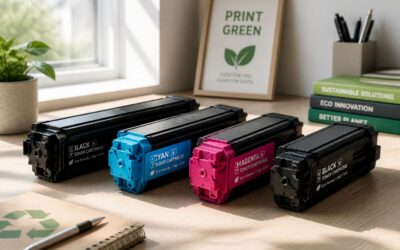
The environmental impact of these cartridges is also tied to their shelf life and use. A cartridge that dries out must be thrown away, but a toner cartridge that is empty can usually be returned and refilled or recycled. The truth is that the toner cartridge vs printer cartridge comparison must include how long each unit remains viable. Buying a cheaper printer cartridge that expires before you use it is not a bargain. It is waste. Since South Africa has limited recycling infrastructure for certain plastics, extending the usable life of the cartridge is the most responsible choice.
Routine Maintenance Requirements for Each Type
Maintenance routines diverge between the two systems. Inkjet printheads require regular cleaning cycles to prevent dried pigment from blocking nozzles. Laser printers demand occasional attention to the imaging drum and waste toner bin. These tasks are simple but must be scheduled consistently, otherwise print quality degrades.
- For ink: run a nozzle check weekly.
- For toner: inspect the drum monthly.
Longevity and environmental impact show a similar pattern. A well maintained toner cartridge often outlives an ink unit by several years. In South Africa, recycling schemes accept empty toner containers more readily than plastic ink tanks. This makes the toner cartridge vs printer cartridge decision relevant for reducing e-waste.
Common Issues: Clogging, Drying, and Leaking
Clogging is the classic inkjet failure. Dried liquid ink blocks nozzles, and the printhead stops firing entirely. Laser units rarely clog, but toner can settle into hard lumps if ignored for months. Leaking is another divider. Ink cartridges leak when mishandled or cracked. Toner cartridges leak too, but the mess is powder, not liquid, which makes cleanup different.
These failures affect longevity. A clogged ink cartridge sometimes revives after a cleaning cycle, but I have seen plenty that never wake up. A leaking toner drum often demands replacement. In South Africa, both issues influence how quickly units reach recycling schemes.
- Ink: clean printheads monthly to avoid drying.
- Toner: rotate stock to prevent caking.
For the toner cartridge vs printer cartridge debate, a leak tells you more than any spec sheet.
Recycling Programs and Disposal Guidelines
Maintenance separates the occasional user from the dedicated one. For ink, a monthly nozzle check preserves printhead health and avoids costly replacements. Toner demands less frequent attention, but storing cartridges upright and away from humidity prevents clumping. These habits extend the functional life of each unit, reducing the frequency of new purchases.
Longevity also depends on how you handle the empty unit. A toner cartridge vs printer cartridge comparison often ignores the environmental toll. In South Africa, recycling programs accept both, but preparation differs. Ink cartridges need draining and rinsing. Toner drums require sealing to prevent powder spillage.
- Check local e-waste collection points for drop offs
- Return original packaging to certified recyclers
- Avoid incineration, which releases plastics and metals
Disposal guidelines vary by municipality, yet the principle holds. Proper handling ensures that toxic residues stay out of landfills and that precious metals reenter production cycles. The choice between toner and ink thus extends beyond print quality into stewardship, a decision that weighs toner cartridge vs printer cartridge impact as much as page yield.
Environmental Footprint: Manufacturing and Waste
Maintenance might seem like a chore, but it directly shapes the environmental footprint of your printing habit. A well-kept toner cartridge vs printer cartridge comparison reveals that laser units often survive longer because they lack liquid ink that dries out. However, every cartridge demands a manufacturing energy cost that is largely invisible at point of sale.
Longevity and waste share a strange relationship, and I’ve seen it too often! When you extend a cartridge’s life through careful handling, you delay the moment it enters the waste stream. The extraction of metals, plastics, and rare earth elements for each unit is the true hidden price. Manufacturing a single toner cartridge consumes more energy than producing an inkjet cartridge, yet toner yields more pages.
Refilling vs. Replacing: Pros and Cons
Refilling a cartridge is a practical way to dodge that waste, but it carries a specific risk. When you refill a toner cartridge vs printer cartridge, the quality hinges entirely on the technician’s skill and the unit’s condition. A worn drum can ruin an entire print run.
Replacing offers predictable performance. A factory-sealed component eliminates the guesswork and the immediate maintenance burden. However, that safety net discards a unit with weeks of service left, effectively reappearing as the manufacturing energy cost in another cycle.
I weigh the risk of failure against the potential for savings. Refilling demands vigilance. Replacing demands money. Both choices rewrite your total ownership cost in ways the shelf price never reveals.
Choosing the Right Cartridge for Your Specific Needs
Assessing Your Monthly Print Volume
Your monthly print volume is the quiet arbiter between toner and ink. A home office printing forty pages per week will find different demands than a legal firm running two hundred daily. Toner cartridge vs printer cartridge is not a fixed contest; it shifts with your rhythm.
Consider your patterns. High volume favours toner’s endurance. Low volume often suits ink’s lower entry cost. Ask yourself these questions:
- Do you print daily or weekly?
- Are documents text-heavy or image-dense?
- Does your workload spike seasonally?
Each answer alters the balance. A sporadic user with toner may face premature waste, while a prolific user with ink battles frequent swaps. Assess honestly, because your print flow dictates the practical winner.
Matching Cartridge Type to Print Quality Demands
Matching cartridge type to print quality demands is where the decision becomes personal. Text-heavy documents benefit from toner’s crisp, uniform edges. Photographs and marketing materials often demand ink’s fluid tonal range.
I’ve watched South African businesses discover their quality requirements shift between seasons. A tender document demands one standard, a client presentation another. Your actual output should determine the technology.
Consider what your work must achieve:
– Corporate reports demand precise black-and-white text clarity
– Brochures require smooth gradient transitions between colours
– Proofing documents need accurate colour representation
When quality demands vary, weighing toner cartridge vs printer cartridge against your specific output yields the practical answer.
Printer Compatibility and Warranty Implications
Printer warranties in South Africa hinge on cartridge provenance. Manufacturers often reject claims if third-party consumables caused the fault. This is where the toner cartridge vs printer cartridge decision affects your legal protection.
Compatibility goes beyond physical fit. Printers use chips to authenticate cartridges. A mismatched chip can trigger error codes, disable features, and log failures in the memory. I have watched warranty disputes unfold over a single chip mismatch. Those logs become evidence during warranty assessments.
Check these details before buying:
- Your printer model’s exact cartridge series
- The regional code printed on the packaging
- Whether the supplier lists warranty approval
South African retailers often stock imported cartridges with different regional firmware. The cartridge may slot in, but the printer may not recognise it. That leads to wasted time and contested claims. Weighing toner cartridge vs printer cartridge choices means matching consumables to both your device and your warranty terms.
Budget Planning: Initial Investment vs. Recurring Costs
Initial purchase price rarely reveals the full financial picture. The average small business in Johannesburg spends over R3,000 annually on consumables, and that figure swings wildly depending on whether you choose toner cartridge vs printer cartridge options. A laser printer’s toner cartridge costs more upfront, but its yield often reaches 2,000 pages. Inkjet cartridges look cheaper at the counter, yet they run dry inside 300 pages. Recurring costs dominate the budget.
Consider these cost layers:
- Replacement frequency based on your weekly print volume
- Delivery or travel costs for emergency refills
- Storage failures that force premature cartridge swaps
The toner cartridge vs printer cartridge decision changes how you allocate funds each quarter. South African users with sporadic printing habits often prefer lower recurring costs, while volume offices look at price per page. Your budget must reflect the full cycle, not just the shelf price.
Space, Noise, and Power Consumption Factors
Tucked into a corner of a Johannesburg office, size matters more than most buyers admit. A laser machine with a toner cartridge vs printer cartridge setup demands a footprint that grows with its paper tray and fusing assembly. Compact inkjet models slide onto shelves or squeeze into narrow gaps. Before you commit, measure the desk, the cupboard, or the server room space you actually have.
Noise and power follow the same curve. Laser printers slam and whirr during warmup, pulling 300 to 500 watts on start. Over a day of sporadic printing, that draw adds up on your municipal bill. Inkjets sip energy, sometimes under 30 watts when idle, and emit a soft mechanical hiss instead of a mechanical roar. Office environments often require quiet. An open-plan layout with thin partitions amplifies every drum rotation.
– Laser units need ventilation; trapped heat shortens toner life.
– Inkjet bodies stay cool, allowing enclosed storage.
– Power surges in older Joburg buildings affect laser fusers more.
Your choice between toner cartridge vs printer cartridge should hinge on these practical realities. A noisy laser wastes its speed advantage in a library or reception area. A slow inkjet frustrates a busy admin desk. Match the unit to your physical environment, not just your print volume. The right decision feels unobtrusive, silent, and slight on energy, regardless of which cartridge type you select.
SME and Home Office Decision Framework
Every SME and home office must face the toner cartridge vs printer cartridge question sooner or later. The smart approach is to start with workflow, not hardware. Stand near your machine for a single busy morning. Observe who sends jobs, how long they wait, and what they do when the device jams. That reality beats any brochure.
Use that observation to build a quick decision framework.
- Does the printer sit in a shared area or a secure room?
- Who handles supplies when loadshedding interrupts a job?
- What does a failed print actually cost your daily operation?
Answer those three, and the toner cartridge vs printer cartridge choice becomes a business decision rooted in your own office rhythm, not a tech spec.

0 Comments