Why Recycling Your Empty Toner Cartridges Matters
The Environmental Toll of Discarded Cartridges
One discarded toner cartridge takes up to 450 years to decompose. In South Africa, where landfill space is shrinking, that single plastic shell is a slow-moving hazard.
What happens when a cartridge is dumped?
- The polyethylene casing fragments into microplastics.
- Residual toner powder leaches heavy metals into groundwater.
- The metal drum and springs corrode, releasing oxides.
Each outcome compounds the next. Toner cartridge recycling staples are the core steps that break this chain: collect, separate, and return. I have opened supply cupboards in Cape Town offices stacked with empties, each one a deferred problem. The environmental toll of discarded cartridges is not abstract. It shows up in contaminated boreholes, in struggling crops, and in the hidden cost of treating water. Making this practice routine protects both land and water for the people who farm and drink from them.
Conserving Non-Renewable Resources
A single toner cartridge’s plastic body consumes about 3 liters of crude oil to produce. That oil is gone if we toss the cartridge. I have seen crates of spent cartridges in Johannesburg, each one holding fossil fuel that will never be used again.
Toner cartridge recycling staples recover those hydrocarbons. The process returns:
- Polymer pellets for new plastic housings
- Aluminium scrap for drum cores
- Steel springs for gears and fasteners
Every gram we reclaim is a gram we do not need to drill or dig. South Africa’s non-renewable reserves are finite! By returning these materials, we keep the country’s own soil intact and its water untainted by extraction.
Reducing Landfill Waste and Pollution
A single toner cartridge takes 450 years to break down in a landfill. That is longer than South Africa has existed as a nation! During those centuries, the plastic shell fragments into microplastics that migrate through the soil, while residual toner powder carries heavy metals into underground water sources.
This is where toner cartridge recycling staples matters. By intercepting spent cartridges before they reach a dump, the recycling process captures every reusable component and safely neutralises hazardous residues.
- Aluminium drum cores are stripped and remelted for new products.
- Steel springs are separated for metal recovery.
- Polymer housings are ground into pellets for industrial moulding.
Landfills in Gauteng and the Western Cape are filling faster than new sites can be licensed. I have watched this pressure mount each year. Each cartridge diverted through toner cartridge recycling staples reduces strain on municipal waste systems and prevents toxic leachate from contaminating surrounding farmlands.
The Economic and Social Benefits of Recycling
South Africa’s unemployment rate sits near 32%. Every cartridge returned through toner cartridge recycling staples feeds a repair economy that employs local hands. Technicians strip and rebuild units. Small logistics firms move them. This is commerce with a measurable wage footprint, not charity.
Spent cartridges hold real value. Aluminium, steel, and polymer components feed secondary markets. Informal waste pickers collect and sort them for cash. Toner cartridge recycling staples turns a discarded object into income for households that need the earnings.
Schools and community groups run cartridge drives. They earn funds for every unit collected. In my years with collection programmes, I have watched that money buy books and sports equipment. Recycling pays a social dividend.
How Recycling Lowers Your Carbon Footprint
Every empty cartridge carries embedded carbon from its manufacture. Choose toner cartridge recycling staples and that carbon stays in circulation. Virgin production demands fresh polymer, raw aluminium and long distance shipping. Recycling removes most of that demand.
The carbon calculation is straightforward. A single returned unit spares roughly 2.4 kilograms of emissions that a brand new cartridge would have required. Aggregate that across an office block in Sandton or a campus in Cape Town, and the savings equal a measurable drop in demand for fossil energy.
What actually shrinks the footprint?
- Recovered steel and plastic replace virgin feedstocks.
- Local collection routes cut international freight.
- Fewer incinerated shells mean less atmospheric carbon.
Toner cartridge recycling staples turns a used object into a repeatable climate decision.
How the Staples Recycling Program Works
Overview of Staples In-Store Drop-Off Process
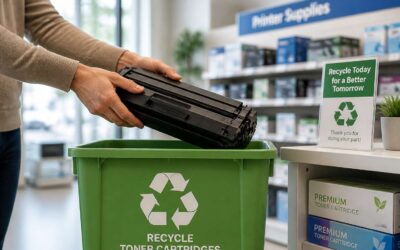
The Staples in-store drop off process is a quiet ritual. I walk in, carrying spent cartridges. No appointment waits. Staff verify each unit and apply rewards immediately.
The procedure follows a simple order:
- Locate the recycling station near the tech section.
- Hand your cartridges to a staff member or deposit them directly.
- Receive your rewards credit instantly.
This toner cartridge recycling staples program turns a mundane errand into a precise transaction. The cartridges vanish into bins, destined for shredding and renewal. Every drop off feeds the cycle without fuss.
Accepted Materials and Quantity Limits
Each bin at Staples hides a quiet bureaucracy. The toner cartridge recycling staples program accepts only specific items. They take ink and toner cartridges from most major brands, both original and remanufactured. But they exclude broken or leaking units. They also refuse cartridges that are not fully emptied. This is not a dumping ground; it is a precise transaction. I appreciate that clarity.
The quantity limits are equally deliberate. Most stores allow up to ten cartridges per person per day. Business customers face separate rules and need prior arrangement. The system rewards consistency, not hoarding. Every cartridge must be inspected before it counts. The staff know the catalogue by heart. That scrutiny keeps the cycle humming.
Earning Rewards and Credits for Participation
Here is the part that transforms obligation into opportunity. Staples rewards each qualifying cartridge with a modest credit. The credit appears after staff inspection and approval. It is a small gesture acknowledging your role in a larger system.
Earning credits requires consistency. Register for a Staples Rewards account or present your existing one at the counter. I have watched regulars leave with a receipt that holds more value than paper.
- Ten cartridges per visit earns the maximum daily credit.
- Credits accumulate and apply to future purchases.
Toner cartridge recycling staples becomes a habit with a tangible return. The credit does not make you rich. It makes you a participant. That participation sustains the entire cycle. That is worth more than the few rand in your pocket!
Mail-In Recycling Options for Remote Customers
Staples Recycling Program Explained: The Mail-In Route for the Hinterlands
The Staples recycling program runs on a simple premise: carry your spent cartridges to a branch, or if you live in the Northern Cape and the nearest store is a day’s drive away, let the cartridges travel instead. The mail-in option exists for remote customers who will not let distance outrank their duty.
The process is refreshingly dull. Request a prepaid label online. Box the cartridges. Hand the parcel to the post office. That is the entire ritual, no courier fees and no awkward stares from retail staff.
Here is what makes the system work:
- Prepaid labels arrive via email within minutes
- Packaging guidelines prevent crushed toner catastrophes
- Tracking numbers confirm your parcel reached the warehouse
Toner cartridge recycling staples should never demand a road trip. The mail-in route guarantees it stays a home affair.
Bulk Solutions for Businesses and Offices
Offices generate cartridges in volumes that household recycling cannot match! Staples answers with dedicated bulk collection options for businesses. A single account manager coordinates pickup schedules, so spent cartridges leave the premises before they pile up in storage rooms.
The program scales to your operation:
- Designated collection bins for high-volume floors
- Scheduled pickups aligned with procurement cycles
- Consolidated documentation for sustainability reporting
Toner cartridge recycling staples at this scale requires planning. The bulk route removes the burden from individual employees and places it where it belongs, with the organisation. For facilities generating dozens of units monthly, this transforms recycling from an occasional chore into standard procedure.
Preparing Your Cartridges for Safe Recycling
Proper Packaging and Containment Guidelines
A single loose toner cartridge can spill its contents across a recycling bin, contaminating everything nearby. Proper preparation prevents this. At Staples, the drop off process accepts cartridges as they are, but your role is to ensure they arrive intact.
Wrap each cartridge in a plastic bag or newspaper. Seal the opening with tape if the drum is exposed. This containment stops toner dust from escaping during transit.
- Place the cartridge in a sturdy box if the original packaging is gone.
- Secure the box with tape, not string, to avoid snagging.
Following these guidelines makes the toner cartridge recycling staples program smoother for staff and protects your vehicle from residue.
Inspecting for Leaks, Damage, or Residue
A cartridge can look pristine yet release a puff of black dust when tilted. I once saw that happen. The dust signals a leak, and it spreads quickly.
Inspect your cartridge before considering toner cartridge recycling staples. Run your fingers along the seams and the drum cover. Look for cracks, warped plastic, or toner powder. Residue clings to the discharge area, so check that spot.
- Hold the cartridge under bright light to spot powder.
- Gently shake it near a white surface for loose toner.
- Check the chip and contact points for smudges.
Damage may not be visible at first glance. A bent corner or scratched drum compromises the entire unit. If you find residue, wipe it with a dry cloth, not water! Your inspection ensures the toner cartridge recycling staples process stays clean.
Safeguarding Sensitive Data on Printer Parts
Every cartridge carries memory. The chip on its side records page counts, maintenance histories, and sometimes fragments of printed documents. A discarded unit can expose fragments of your private work. Toner cartridge recycling staples moves these units through a chain of hands, and you cannot control every link. Prepare the cartridge so that data dies before the plastic does.
Remove the chip if your printer model allows it. If not, run a purge print until the buffer empties. Seal the cartridge in a plastic bag after wiping the contacts. This is the quiet work of safekeeping.
- Detach the memory chip with a screwdriver.
- Print blank pages to overwrite stored data.
- Wrap the cartridge in its original packaging.
A cartridge prepared this way carries nothing forward. The recycling process proceeds without risk to your identity.
Sorting by Brand, Type, and Compatibility
Sorting cartridges before drop off prevents delays at the counter. Separate by manufacturer first, then by specific model. Toner cartridge recycling staples relies on this order because each unit carries a unique chip set. A Samsung toner differs from an HP toner even when the casing looks similar.
- Check the label for the exact model number.
- Group same brands into separate bags.
- Note any compatibility issues on the bag.
Compatibility affects whether the cartridge can be refilled or must be dismantled. Staff at the collection point use these details to route each unit correctly. Taking a few minutes to sort at home keeps the process efficient and reduces the chance of rejection.
Labeling and Sealing Boxes for Shipment
After sorting, the outer box becomes the final document in your recycling chain. Legible labeling prevents a sealed carton from becoming an anonymous parcel for warehouse staff. Use a permanent marker to print the manufacturer, model number, and destination code on the top flap. For South African couriers, write the tracking reference twice, once on the side.
Sealing demands a deliberate hand. Press tape along every seam, especially the bottom, which bears the weight. I have seen parcels returned because the sender forgot to reinforce the fold. A single strip across the centre is not enough.
- Use two tape strips on the bottom flap.
- Ensure the label faces outward without obstruction.
- Add a second label inside the box as a backup.
Toner cartridge recycling staples depends on this final preparation to keep shipments moving without delays.
Alternative Recycling Programs Beyond Staples
Manufacturer Take-Back Initiatives
While toner cartridge recycling staples offers a familiar storefront, manufacturers like HP and Epson run take-back initiatives where you send spent cartridges directly to their facilities. These programs often use prepaid labels and accept multiple brands. Some even reward you with service credits or discount codes!
For a broader reach, consider these alternatives:
- Brother’s cartridge collection scheme
- Canon’s green return program
- Local eco-depots tied to municipal waste systems
I have seen how each route requires that you seal cartridges properly, but the logistics are simple. The point is to channel every cartridge into a certified recovery chain, not a landfill.
Local Municipal and Community Recycling Events
In South Africa, informal e-waste streams outpace formal recycling by a wide margin. Local municipal and community recycling events close that gap. These gatherings, often held quarterly at schools or civic centres, accept toner cartridges alongside other e-waste. You simply drive up, hand over your sealed cartridges, and receive a receipt for your records. I have seen these events fill up within hours, so arrive early!
What makes these events valuable is their reach. They serve areas where Staples stores are scarce. They also connect you with recycling coordinators who can answer questions about data security and cartridge condition. Some events even partner with certified recyclers to ensure every component is processed responsibly.
- Check your municipality’s website for event dates
- Confirm they accept toner cartridges before you go
- Remove cartridges from printer boxes to save space
This route complements toner cartridge recycling staples without requiring a store visit. It turns a routine errand into a community effort.
Charitable and Non-Profit Collection Drives
Charitable and non-profit collection drives across South Africa present a meaningful alternative to toner cartridge recycling staples. Schools, churches, and NGOs run these initiatives to turn used cartridges into funding for community projects. They collect from donors, sort the cartridges, and sell them to certified recyclers or remanufacturers. The proceeds flow directly into feeding schemes, school supplies, and outreach programmes.
These drives create a visible feedback loop. You drop off a cartridge, and someone benefits beyond the environmental win. Some organisations place collection boxes in office parks, allowing employees to participate year-round. Others schedule quarterly pickups from participating households.
The scale varies widely. A small school might collect a few dozen cartridges each term. A national charity could process thousands annually. Both contribute to the same goal: keeping cartridges out of landfills while funding worthwhile causes. This route adds a philanthropic layer to routine disposal, extending what toner cartridge recycling staples achieve on their own.
Selling or Donating Empty Cartridges
Empty cartridges hold value beyond the Staples counter. Independent recyclers across South Africa pay for bulk lots, and remanufacturers refurbish them for resale. This route often yields cash for schools or small businesses.
Selling directly to a remanufacturer cuts out the middleman. Donating to a registered e-waste collector achieves similar results. Both extend what toner cartridge recycling staples accomplish through their own program.
Consider these options:
- Online buyback platforms that accept shipments from anywhere
- Local e-waste companies offering collection contracts
- Office supply dealers with trade-in schemes
Each channel keeps cartridges in circulation. The key is verifying the buyer’s certification.
Comparing Cost, Convenience, and Environmental Impact
Manufacturer take-back programs deliver the lowest environmental impact because the original equipment manufacturer controls the entire logistics chain. Municipal collections cost less upfront but require you to store cartridges until a scheduled drop-off date. Independent e-waste operators in South African metro areas may charge collection fees.
Online buyback platforms provide prepaid shipping labels but selectively accept cartridges. When I weigh these channels, the trade-offs become visible:
- Collection fees versus prepaid labels
- Storage time until municipal collection dates
- Verification procedures at each channel
- Volume thresholds for free pickups
Environmental impact diverges at this point. A local recycler avoids cross-border shipping emissions. A manufacturer program may consolidate more efficiently. Toner cartridge recycling staples occupies a middle position, offering predictable logistics without the selectivity of buyback platforms or the scheduling constraints of municipal drives.
Proactive Steps to Reduce Cartridge Waste
Choosing Eco-Conscious Cartridge Brands
Most people forget that waste reduction starts long before the cartridge empties. By inspecting product labels and asking pointed questions, you can steer your purchases toward eco-conscious choices. Choosing eco-conscious cartridge brands means supporting designs that use less plastic and more recycled material. This simple shift complements toner cartridge recycling staples, because fewer non-recyclable parts make each drop-off more effective. Even a single cartridge matters.
- Switch to high yield cartridges to reduce the frequency of replacements.
- Buy from brands that run closed loop programs for their own products.
- Store empties in a dry, sealed container until you have enough for a trip to the store.
These steps lower the burden on recycling facilities and keep harmful materials out of South African landfills. Small habits, repeated consistently, create meaningful change without extra effort.
Optimizing Printer Settings to Extend Cartridge Life
Most South African printers default to standard mode, draining toner faster than needed. Switching documents to draft mode extends cartridge yield by nearly a third. Every longer-lasting cartridge is one less unit in the waste stream.
Toner cartridge recycling staples remains the final safeguard, yet the gap between replacements is where users hold real leverage. A longer-running cartridge means fewer trips and more value from each toner cartridge recycling staples drop-off. Printer settings control consumption in ways easy to overlook:
- Duplex printing uses both sides of each sheet.
- Grayscale mode stops colour toner draining on text files.
- Toner density lowers coverage without visible loss.
- The preview pane catches errors before a page prints.
These adjustments take seconds in the driver software. Correcting them costs nothing! The effect across a busy household or small business is substantial. Waste reduction begins before the cartridge empties.
Refilling vs. Recycling: Weighing the Trade-Offs
Refilling a cartridge feels like a small rebellion against planned obsolescence. A syringe of toner, a reset chip, and the printer hums again. But toner cartridge recycling staples offers a different promise, one rooted in material recovery rather than temporary revival.
The trade-off is subtle. Refilling preserves the plastic housing, yet repeated refills degrade internal components. Drum rollers and wiper blades wear thin. Print quality fades with each pass. A cartridge handed to Staples, by contrast, enters a system designed to dismantle and repurpose every part.
The condition of the unit decides the path:
- Newer cartridges tolerate a single refill well.
- Repeated refills strain seals and rollers.
- Leaking or damaged units carry too much risk.
Staying Updated on Changing Recycling Policies
Waste reduction starts before the cartridge empties. Adjust print settings to draft mode for internal documents. Consolidate multiple page jobs into a single run. Store spares in a cool, dry place. These habits help:
- Enable duplex printing by default.
- Use toner saver mode for drafts.
- Clean drum contacts with a dry cloth.
But proactive steps only carry so far. Recycling policies change without public fanfare. The toner cartridge recycling staples program at your local branch may alter its accepted items list quarterly. A cartridge acceptable in March could be rejected in June. Check the official website before each visit. Call the store to confirm current rules. Also, monitor updates from the South African Waste Information System. They publish amendments to producer responsibility regulations. Staying current is not optional; it is the price of keeping waste out of landfills.


0 Comments