Laser Toner Cartridge Basics
Defining Toner Powder and Its Purpose
Every office in South Africa relies on a silent workhorse: the laser printer. Yet, most users only interact with the consumable when the dreaded “toner low” warning appears. Understanding what is laser toner cartridge technology can save you money and prevent frustration, especially when printing high-volume proposals or client invoices. Unlike the liquid ink found in inkjet machines, laser printers use a fine, dry powder. This powder is the essential ingredient that transforms blank pages into crisp, professional documents.
Toner powder is not simple dust. It consists of microscopic plastic particles blended with colour pigments. When the printer’s drum is charged with static electricity, it attracts these particles to form the desired image. The paper then passes through a heated fuser unit, melting the plastic resin so it bonds permanently to the fibres. This is why laser prints are smudge-proof and dry instantly, a massive advantage in humid coastal cities like Durban.
To get the best results, it helps to understand the components inside that cartridge. A typical unit contains several distinct parts working in unison.
– The OPC drum, which acts as the imaging surface.
– A developer roller that transfers toner to the drum.
– A wiper blade that cleans excess powder after each rotation.
– The toner reservoir itself, holding the fresh supply.
The purpose of this system is purely functional: to deliver consistent, high-speed output. When you clarify what is laser toner cartridge construction, you realise it is a precision tool, not just a box of powder. Buying a quality cartridge ensures your machine runs cooler and avoids the streaks caused by low-grade refills. For businesses in Joburg or Cape Town, the reliability of a genuine or high-quality compatible cartridge directly impacts the professional look of your printed brand. Knowing this helps you choose the right supply for your specific printer model and volume needs.
Toner Versus Liquid Ink: Key Contrasts
Laser toner cartridges and liquid ink operate on fundamentally different principles. The dry powder is fused to paper with intense heat. Liquid ink is absorbed into the fibers. This basic contrast affects everything. It affects moisture resistance, output speed, and how sharp text appears on the page.
The technology behind what is laser toner cartridge design explains this. The heat-fusing process creates a permanent bond. Liquid ink remains vulnerable to smudging and water damage. This matters in humid coastal cities.
– Laser toner is dry and smudge-proof.
– Liquid ink is wet and takes time to dry.
– Laser output has crisp, uniform edges.
– Inkjet output can bleed on certain paper types.
– Toner resists fading from sunlight.
The powder also sits on the paper surface rather than soaking in. This produces a slightly raised texture. It gives laser prints a professional feel that inkjet pages lack. Understanding these contrasts helps businesses choose the right technology for their document needs. It is a simple decision based on your priorities.
Anatomy of a Standard Toner Cartridge
Most people never see the quiet mechanism behind a crisp, black-and-white page. The cartridge is a precision instrument, not a simple container. Inside its sealed, light-proof shell, a complex choreography unfolds with every print job.
Consider the primary components:
– The photoreceptor drum, a cylindrical master that holds an electrostatic charge
– The toner hopper, a reservoir storing the fine, dry powder
– The developer roller, which transfers a controlled layer of toner onto the drum
– The wiper blade, a critical piece that cleans residual powder after each rotation
– The corona wire or roller, which applies the initial charge to the drum
The process is deceptively simple. A laser draws an image onto the drum, reversing the charge where it strikes. The developer roller attracts toner to those charged areas. The paper then passes between the drum and a transfer roller, pulling the powder from the drum onto the sheet. A final fusing unit melts the toner into the fibres.
Understanding what is laser toner cartridge anatomy reveals why these units are so efficient. Each component is engineered for thousands of cycles, yet they depend on precise alignment. When one part fails, the subtle dance falls apart, reflected in smudged prints or light streaks. The quiet complexity inside a standard cartridge holds the secret to its reliable performance.
Particle Composition and Print Quality Implications
Particle composition determines what a printed page actually looks like. Toner powder is a blend of polyester resins, carbon black, and charge control agents, ground or chemically grown to a uniform diameter of roughly five to ten microns. Consistency is everything. Irregular particles disturb the electrostatic charge, producing faded patches or background haze instead of clean type.
- Smaller particles deliver sharper edges and finer detail
- Larger particles increase density but reduce resolution
- Charge control agents keep the powder responsive to the drum’s field
Anyone asking what is laser toner cartridge quality truly depends on will find the answer in this microscopic uniformity. Understanding what is laser toner cartridge performance means recognising that particle stability wavers with the environment. In South Africa, humidity and heat can disrupt the charge balance, causing clumping or poor transfer. Manufacturers therefore invest heavily in particle engineering, because a stable toner formulation is the quiet foundation of every crisp document.
The Mechanics Behind Laser Printing
The Electrostatic Charging Phase
The electrostatic charging phase is where laser printing earns its credibility. A corona wire or charging roller applies a uniform negative charge to the photoconductor drum. That drum, often coated in selenium, holds the charge with impressive stubbornness.
A laser beam then scans the drum, zapping specific points to erase the charge. These discharged regions form a latent image. Here is the sequence in plain terms:
- Charge the drum surface
- Discharge image areas with laser
- Let toner cling to discharged zones
This delicate dance directly relates to what is laser toner cartridge, since the cartridge houses the drum, toner, and charging elements. Skipping this phase would leave you with blank paper and a mild existential crisis.
Laser Exposure and Latent Image Creation
Once the drum carries its uniform negative charge, the laser takes over. A mirror spins rapidly, directing the beam across the drum’s surface. Wherever the light touches, the charge dissipates. These discharged points form the latent image, an invisible electrical pattern of the page.
The precision determines line sharpness. Each dot corresponds to a pixel in your document. The writing system within what is laser toner cartridge coordinates this process, ensuring every character lands exactly where it should. The drum rotates steadily, allowing the laser to build the image line by line. I find this coordination genuinely impressive.
- The laser writes only the image areas
- Non-image areas retain their charge
- Toner targets only the discharged zones
This entire sequence happens in milliseconds.
Toner Development and Drum Adhesion
Once the latent image is set, toner arrives via the developer roller. A doctor blade shaves the toner layer to a single particle thickness. Each toner particle carries a negative charge, ready to obey electric fields.
As the drum spins, unexposed areas repel this toner. Exposed areas, now relatively positive, pull it close. Electrostatic force adheres toner to the drum instantly. No glue, no heat; charge alone holds the image together.
- Toner charge must stay consistent
- The drum’s charged regions must remain intact
- The developer roller must deliver a uniform layer
That interplay is the answer to what is laser toner cartridge: toner’s purpose is to follow electrical instructions with absolute precision. Get that wrong andprint quality collapses.
Transferring Toner to the Paper Surface
Here is the content based on your specifications:
For all the intricate science that precedes it, the actual moment of transfer happens in a fraction of a second. The drum, now carrying its delicate cargo of charged particles, must make contact with the page. This isn’t a gentle touch; it is a calculated electrical negotiation.
The paper itself is given a positive charge that is significantly stronger than the negative charge holding the toner to the drum. As the sheet passes by, the pull of this stronger force physically lifts the powder from the photosensitive surface. It creates a clean break, moving the image across the gap without smudging or scattering. At this stage, the image is merely resting on the fibres. It lacks permanence and would rub off at the slightest touch. The real magic happens next, where heat and pressure fuse the particles into the page’s very structure.
This entire sequence relies on absolute precision. Consider the critical components that must work in perfect harmony to make this happen:
– The transfer roller applies the critical positive charge to the paper.
– The fuser unit, with its heated rollers, melts the resin within the toner.
– The separation pawls prevent the paper from sticking to the hot fuser.
Understanding what is laser toner cartridge functionality reveals that this final pressure and heat create the durable bond we all rely on. The fuser reaches temperatures near 200 degrees Celsius, literally melting the plastic polymers within the toner powder. When this molten mixture cools, it hardens to become one with the paper. This is why a laser print emerges dry and warm to the touch. It is also why pages are resistant to water and fading, a stark contrast to older printing methods. The entire operation, from electrical charge to thermal bonding, answers the question of what is laser toner cartridge efficiency in a single, swift pass.
Fusing Heat and Pressure for Permanent Bonding
When the toner meets the fuser, its physical nature shifts. The fuser roller’s heating element pushes temperatures past 180 degrees Celsius. This heat overwhelms the resin binders inside each particle, turning solid powder into a molten film that flows into the paper’s interstitial spaces.
Pressure plays an equal role. The opposing pressure roller forces the sheet against the heated surface. Without it, the melted toner would remain vulnerable to cracking. The duration of this contact determines how deeply the toner embeds into the fibres. I have seen pages emerge dry and warm, the image locked in.
The fusion happens in milliseconds! The question of what is laser toner cartridge technology becomes a controlled thermal event. The molten plastic cools immediately, locking pigment into a durable structure. For South African offices dealing with humidity, this matters. The answer to what is laser toner cartridge efficiency rests in this rapid transition.
Cartridge Varieties and Compatibilities
OEM Versus Compatible Toner Cartridges
The aftermarket cartridge market in South Africa is a crowded space. It is worth roughly a third of all printer consumables sold here. This means your choice between OEM and compatible units is a practical decision. When asking what is laser toner cartridge, you must consider the source. An Original Equipment Manufacturer cartridge is built to the exact specification of your printer. A compatible version is a third-party attempt to replicate that result.
Consider the trade-offs carefully.
- OEM cartridges guarantee print quality and maintain your warranty.
- Compatible cartridges offer a lower purchase price but can vary in yield.
- Copier and printer technicians often see chip errors from off-brand units.
The price difference convinces many small offices to try compatible stock. The risk is that a faulty chip or a poor powder seal costs you time. The reliable choice depends on your tolerance for disruption versus your budget.
Remanufactured Cartridges: Benefits and Trade-offs
Remanufactured toner cartridges offer a third option beyond OEM and compatible stock. A used core is disassembled, refilled with fresh powder, and reassembled. The result is a lower price and a smaller environmental footprint. Roughly 30% of South African offices choose this path to save on consumables.
The trade-offs are real. A poorly cleaned drum leaves streaks. A worn doctor blade affects density. Chip resets can fail, triggering error codes. The reliability depends entirely on the remanufacturer:
- Quality of the replacement parts
- Attention to internal cleaning
- Accuracy of chip programming
When you ask what is laser toner cartridge, consider its full lifecycle. Remanufacturing extends that lifecycle and keeps plastic out of landfills. But it does not guarantee the same yield as a new OEM cartridge. Test one batch before committing your office to a bulk order.
Integrated Drum Versus Separate Drum Designs
Ask what is laser toner cartridge, and the answer shifts once you consider drum design. Integrated drum models fuse the toner hopper and imaging drum into one replaceable unit. Separate drum designs keep these components distinct, allowing independent replacement.
Integrated drums simplify maintenance. Each change of toner brings a fresh drum surface, which reduces cleaning duties. Separate drums offer lower costs per replacement, since only the toner cartridge is swapped.
The management approach differs:
– Integrated drums require full replacement when either component fails.
– Separate drums allow targeted part swaps, extending the printer’s service life.
– Integrated units produce less plastic waste in total.
– Separate systems demand technician involvement for drum maintenance.
Offices with heavy print volume often prefer separate drums for reduced consumable expenses. Smaller workspaces find integrated designs more convenient. The choice depends on your tolerance for maintenance complexity versus upfront savings.
Practical Cartridge Management
Selecting the Correct Cartridge for Your Printer Model
Nothing tests a professional’s composure more than a toner cartridge that refuses to click into place. Choosing the correct replacement for your printer model demands more than a glance at the shelf. Ignore the serial number and you risk a costly mismatch.
What is laser toner cartridge compatibility? It is a simple matter of checking the model number against your printer’s specifications. Check these details before purchase:
- Printer model code printed on the rear panel
- Chip region and voltage specifications
- Page yield expectations for your workload
Getting this right saves downtime and wasted toner. One wrong choice can leave you staring at a blinking error light. I once watched a colleague force a cartridge into place, an unfortunate error. Be precise, and your printer will reward you with consistent output.
Common Symptoms of a Failing or Empty Cartridge
A printer rarely dies without warning. It whispers first, through streaked pages and faint ghosting that appears only under certain light. I have watched machines summon a final burst of output before collapsing into silence. Recognizing the signs saves more than frustration, it saves your budget.
What is laser toner cartridge failure really? It is the moment when the drum can no longer hold its charge, when the wiper blade gives up, or when the toner hopper runs dry. The symptoms are predictable.
- Faint vertical stripes that repeat on every page
- Grey background fog across otherwise white areas
- A grinding or clicking sound during rotation
- Pages emerging with uneven density or blank patches
An empty cartridge often announces itself with a single pale page, then nothing. A failing one grows worse over days. Trust the warnings. The cost of ignoring them is far higher than the price of a replacement.
Proper Installation and Handling Techniques
The mechanical whisper of a failing cartridge often traces back to the moments before installation, not the final print cycle. In my years of diagnostics, I have found that the silent killer of what is laser toner cartridge technology lies in the user’s handling habits.
A cartridge is a sealed electrostatic chamber, and its integrity depends on how you treat it before it ever clicks into place. Shaking a cartridge to redistribute powder, a common instinct, can actually cause fresh toner to spill into the waste bin, overwhelming its capacity. Instead, rock it gently from side to side along its horizontal axis. This preserves the charge balance within the drum.
When sliding the unit into the printer, apply even pressure to both sides. A crooked push can snap the drum gear teeth. Listen for the distinct click, but do not force it. Once the toner cartridge is seated, print a test page only after the printer has completed its initial warm-up cycle. This allows the wiper blade to self-lubricate.
Consider the environment where you perform the swap.
– Remove the new cartridge from its packaging only when the printer is ready.
– Avoid bright light exposure to the drum surface for extended periods.
– Touch only the plastic housing, never the green or blue drum cylinder.
– Store the used cartridge upright in a sealed bag to contain residual powder.
Temperature in South African summers can cause toner to clump and settle unevenly. If the cartridge has been stored in a hot space, let it acclimate to room temperature for a few hours. This simple pause prevents condensation from forming on the sensitive OPC drum, which would otherwise create permanent bonding defects on the page. A clean, deliberate installation is often the cheapest maintenance you will ever perform.
Storage Practices to Preserve Toner Integrity
A toner cartridge is a sealed electrostatic chamber. In the half-light of a supply cupboard, its condition is determined by your storage choices. Heat drains charge and clumps toner into hard clods. Humidity performs its own slow corrosion. I have seen cartridges left on sunlit Johannesburg shelves, their powder baked solid by Tuesday afternoon!
A dark closet, cool and dry, keeps the OPC drum’s delicate surface pristine. A stable room temperature between 10 and 30 degrees Celsius keeps the toner free flowing. Cartridges kept horizontal, sealed in original packaging, and rotated oldest first will endure. Away from direct sunlight, radiators, and busy doorways, they remain stable. This is the quiet reality behind what is laser toner cartridge technology.
Maximizing Yield and Reducing Waste
You replace the cartridge because the prints have turned pale, or streaked, or ghostly. It feels like a transaction, a simple swap of plastic and powder. But a laser toner cartridge is a precise electro-photographic engine, not just a bag of soot. Understanding what is laser toner cartridge technology reveals that its core is a fine, dry plastic powder, a carefully engineered mix of polymers and pigments. This powder, not liquid ink, is what makes the technology so fast and so sharp. The cartridge houses this toner alongside a photosensitive drum, a charge roller, and a wiper blade, all working to transfer that powder onto paper with startling accuracy.
Managing this system well can extend its life and slash your printing costs. First, always handle a new cartridge by its ends to avoid touching the sensitive drum surface, as the oils from your skin can leave permanent marks. When you install a cartridge, give it a gentle, horizontal shake before unwrapping it, especially if it has been sitting for a while. This loosens the settled powder and prevents patchy, light prints on the first few pages.
Consider these simple habits for reducing waste and maximizing every gram of toner:
– If you notice faint vertical lines, it often signals a dirty drum, not an empty cartridge. Run a cleaning cycle from your printer’s software menu, which usually rotates the drum and wipes it clean.
– Switch your default print mode to “draft” or “toner save” for internal documents. The quality is still perfectly legible for text, but it uses significantly less powder.
The physical environment plays a larger role than most realize. Toner is highly sensitive to humidity and temperature. If you have a spare cartridge, store it in a cool, dry place, and never in direct sunlight or a damp garage. Resist the urge to open the sealed bag until you are ready to install it. The packaging is a climate-controlled barrier that protects the drum and the powder. Also, check the expiry date printed on the box. While it might still work after that date, the toner can clump, and the drum’s photosensitive coating degrades, leading to poor print quality. A little foresight in how you store it ensures that what is laser toner cartridge technology remains a cost-effective solution rather than a source of frustration.
Recycling, Refilling, and Disposal Best Practices
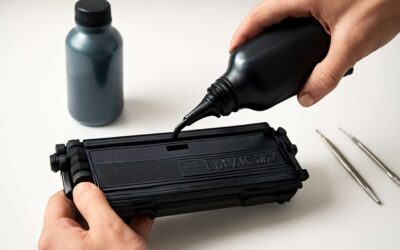
When the cartridge finally stops serving, the question of what is laser toner cartridge becomes a matter of responsibility. Refilling offers a second life, but only if the drum is still healthy. Many South African offices use refill kits, yet they require care. A badly refilled cartridge can leak powder and damage the printer.
- Place the old cartridge in its original box to prevent toner dust from escaping.
- Check if your supplier offers a take-back program. Most major brands in South Africa do.
- Never burn cartridges. The polymers release harmful fumes.
Recycling centres separate the plastic, metal, and residual toner. This keeps hazardous waste out of landfills. The cartridge becomes raw material for new products, closing the loop. For businesses, this is both cost-effective and environmentally sound.

0 Comments